



Tuition varies by program and start date. An Admissions Advisor can review current tuition ranges, fees, and available financial aid options with you before enrollment.
Financial aid options may be available to those who qualify and can include federal grants, student loans, and scholarships. Our Financial Aid team is available to guide you through the process.
Yes. Flexible payment arrangements may be available to help make your education more manageable.
We recommend completing your FAFSA as early as possible, ideally before your program start date, to maximize funding opportunities. Learn more.
Transfer credits from accredited institutions may be accepted following an official transcript evaluation to determine course equivalency.
Submit your official transcripts for review. Our admissions team will provide a clear evaluation of applicable credits.
In some cases, credits earned at affiliated institutions may be transferable, depending on program requirements and course equivalencies.
Applicants must provide proof of high school graduation or equivalent. Additional requirements may include entrance assessments, interviews, background checks, or drug screenings, depending on the program.
No. Many Eagle Gate College programs are designed for students new to healthcare and provide foundational training from the start. However, some advanced programs, such as RN to BSN and MSN, do require prior healthcare education or experience.
No, there is no application fee. The Admissions Advisor will review all requirements during the enrollment process.
Eagle Gate College offers a range of career-focused healthcare programs, including nursing and medical assisting, designed to prepare students for in-demand roles across the healthcare system.
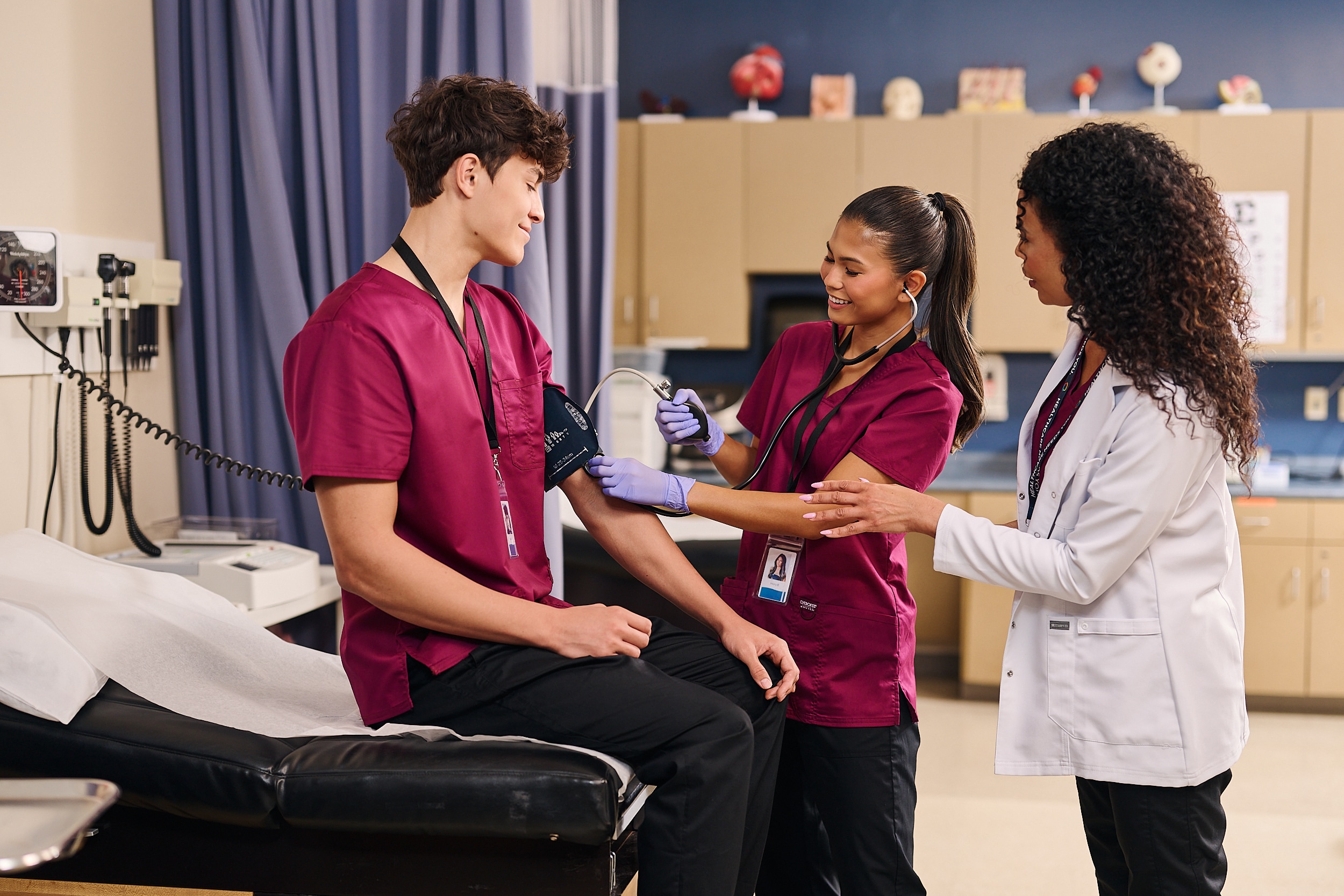
Yes. Our programs combine classroom instruction with hands-on training, labs, simulations, and clinical or practical experiences where applicable.
Eagle Gate College programs prepare students for entry-level and advanced roles across nursing, patient care, and healthcare support settings.
Programs emphasize applied learning through labs, simulations, and real-world clinical or practical experiences to help build confidence and job-ready skills.
Where can Eagle Gate College graduates work?
Depending on the program, graduates may pursue opportunities in hospitals, clinics, outpatient centers, rehabilitation facilities, long-term care, and community-based healthcare environments.
Curricula are aligned with industry standards and licensure or certification requirements, with integrated exam preparation and academic support where applicable.
Healthcare remains one of the fastest-growing employment sectors, driven by population growth, aging communities, and expanding access to care. Career outlook and earning potential vary by role, location, and experience.
Yes. Advanced education and training can expand career opportunities, increase earning potential, and open pathways to leadership and specialized roles within healthcare.